
From Public Housing Projects to Urban Centers: A Historic Opportunity for Puerto Rico

Amid the recent political debate, the U.S. Department of Housing and Urban Development (HUD) has proposed significant changes to the assisted housing model in the United States: work requirements for certain beneficiaries, time limits on receiving subsidies, and modifications to eviction processes related to nonpayment.
For many, these proposals have been interpreted as a threat.
But perhaps the real question Puerto Rico should be asking is different:
Is the current public housing model still the best tool to combat poverty, or have we simply ended up concentrating it in the same places?
To understand this discussion, we must look back.
When Puerto Rico Left the Countryside
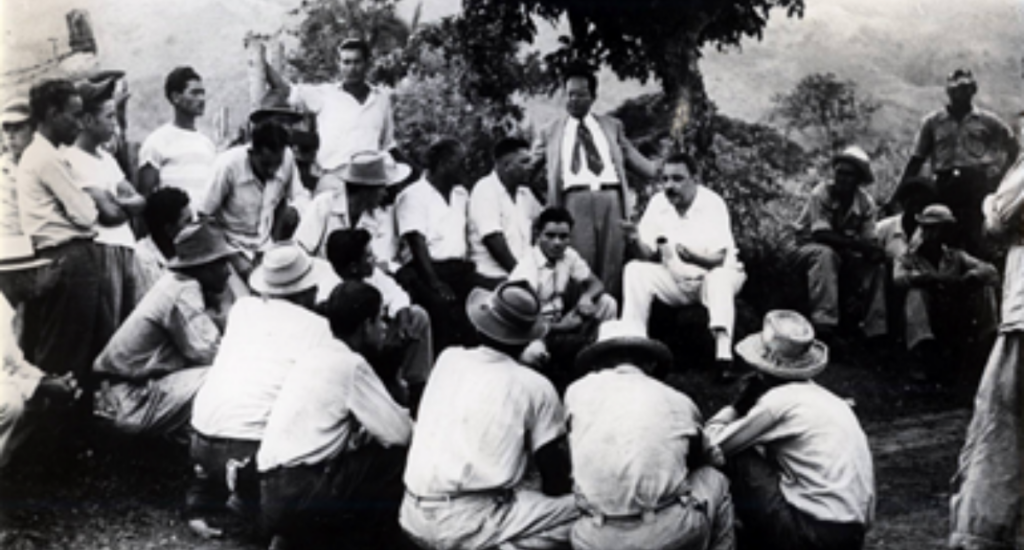
During much of the 20th century, Puerto Rico was a predominantly agricultural society. Thousands of families lived from the cultivation of sugar, coffee, and tobacco in rural areas.
That model changed radically with the industrialization process driven by Operation Bootstrap, promoted under the political leadership of Luis Muñoz Marín.
The economy began shifting from agriculture to manufacturing.
This transition triggered a massive migration from rural areas to the cities.
Thousands of agricultural workers arrived in San Juan, Bayamón, Carolina, Ponce, and Mayagüez in search of employment.
But the cities were not prepared to absorb such rapid population growth.
The Slums and the State’s Response
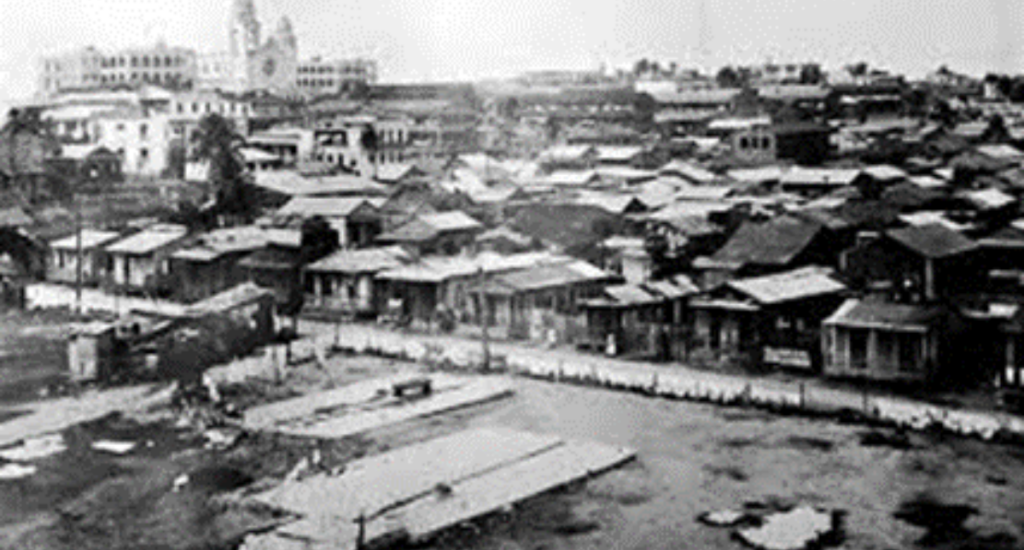
Faced with a shortage of formal housing, improvised communities known as arrabales (urban slums) began to emerge.
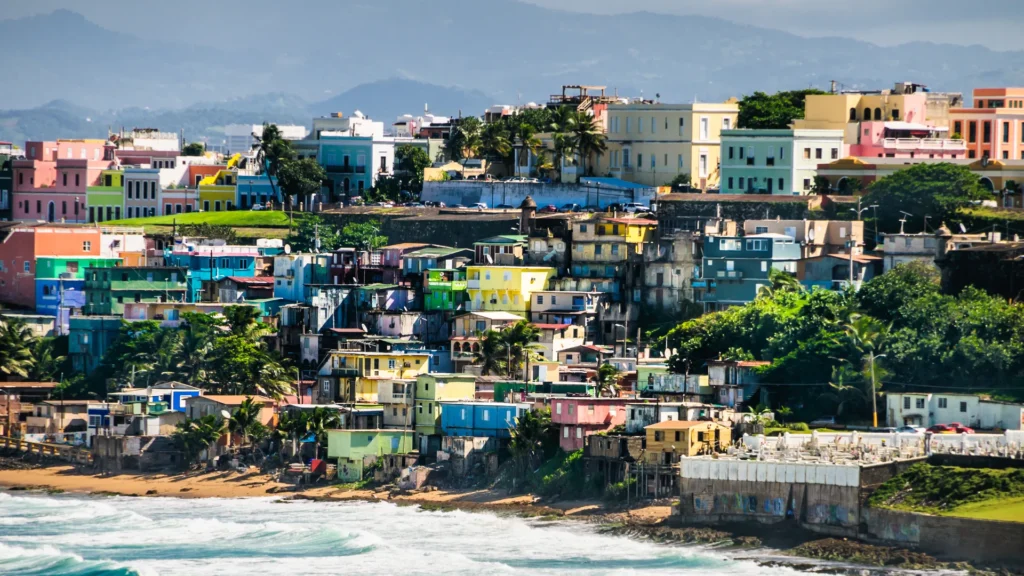
Neighborhoods such as El Fanguito, La Perla, and Tras Talleres reflected this urban crisis.
Improvised housing.
High density.
Lack of potable water and sewage systems.
In response to this reality, the government began developing public housing.
The Original Model We Forgot
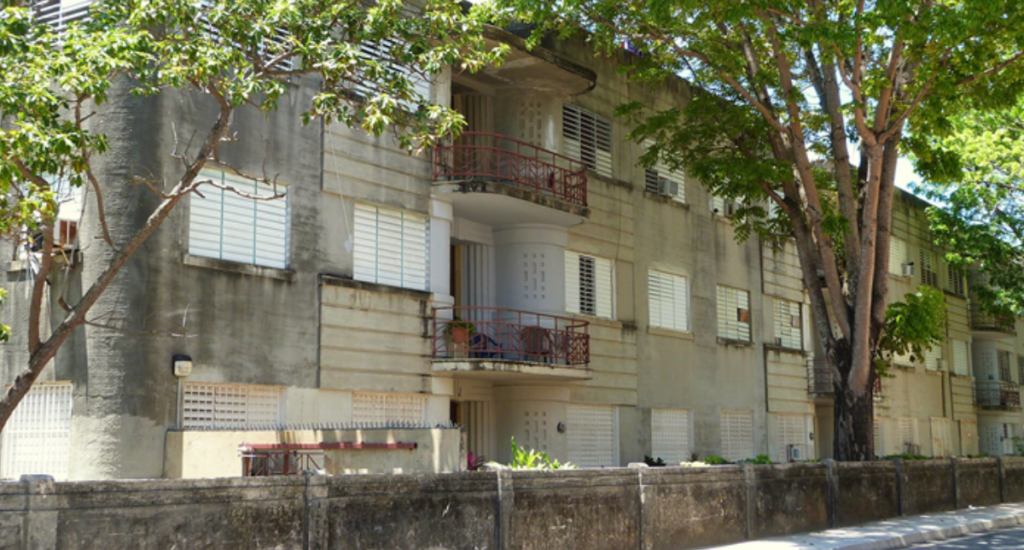
The first major project was El Falansterio of Puerta de Tierra, inaugurated in 1937.
The name was not accidental.
It was inspired by the ideas of social thinker Charles Fourier, who imagined cooperative communities where housing, economic activity, and social life coexisted.
The Falansterio was not simply an apartment complex.
It was a community concept.
Its design sought to foster interaction, belonging, and cooperation among residents.
In a sense, Puerto Rico began with the right intuition.
But that intuition was lost over time.
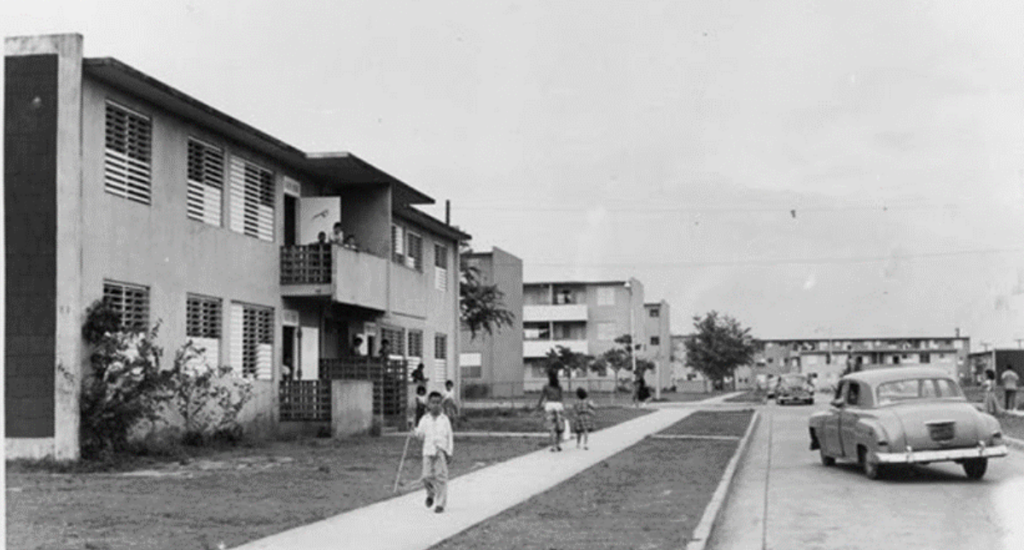
Residencial Manuel A. Perez 1961 – Fuente – Arquitectura, Edificaciones En Proceso de Construccion
When Urban Design Changed
Over time, the urgency to build housing on a large scale led to the adoption of more massive and repetitive models.
Inspired by modernist urbanism promoted by architects such as Le Corbusier, large public housing complexes began to be constructed.
Projects such as Residencial Luis Llorens Torres, Residencial Manuel A. Pérez, and Residencial Nemesio Canales emerged.
These developments solved an urgent housing crisis.
But they also generated a structural problem: the geographic concentration of poverty.
What Behavioral Economics Teaches Us
Decades later, behavioral economics developed by researchers such as Daniel Kahneman and Amos Tversky has demonstrated that the environment deeply influences human behavior.
People’s aspirations, expectations, and decisions are shaped by the environment they observe every day.
When urban design concentrates exclusion, it also concentrates limited opportunities.
The problem was never the people.
The problem was the design.
The Opportunity Puerto Rico Has Today
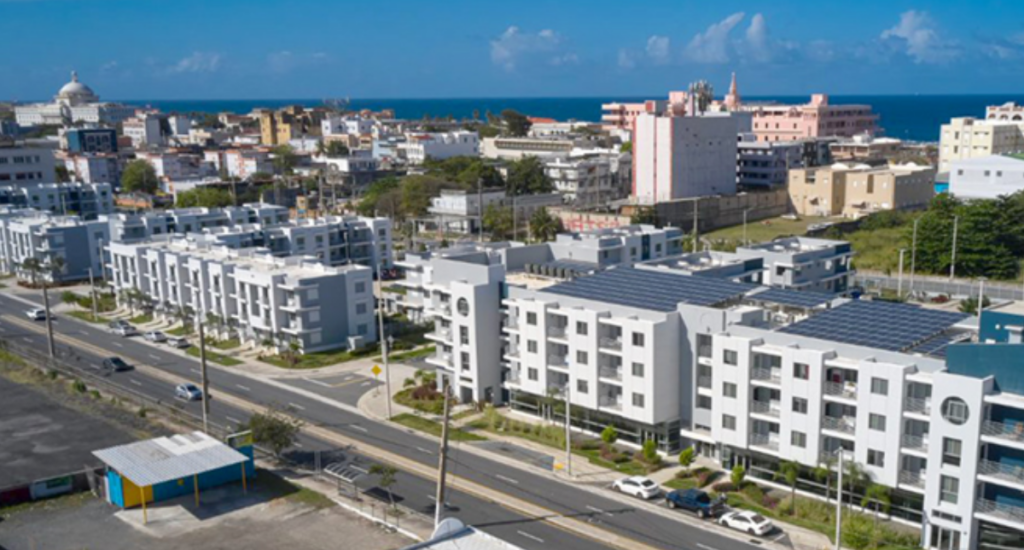
Today Puerto Rico has more than 300 public housing developments.
For decades, we have seen them only as subsidized housing inventory.
But they could become something far more powerful.
They could evolve into the country’s new community centers.
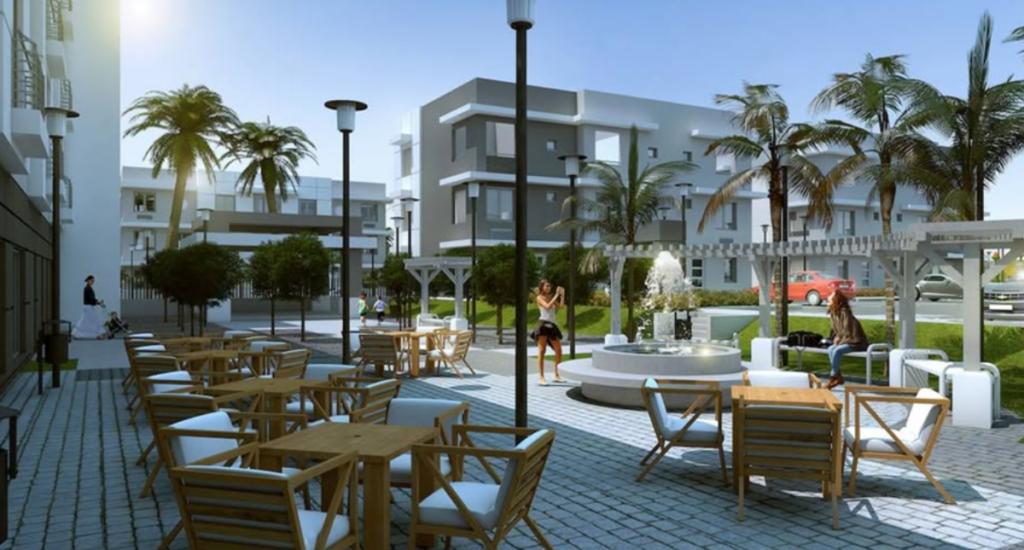
Public housing should not disappear; it should evolve into mixed-use communities that integrate housing, education, commerce, intergenerational living, and self-sufficiency.
Puerto Rico does not need to destroy its public housing developments; it needs to transform them.
The federal discussion about housing subsidies should push us to think beyond the traditional caserío model as a closed structure.
Public housing developments should no longer be viewed merely as spaces for social assistance, but as the largest territorial platform the country has to rebuild community.
Different generations should coexist there:
older adults, young professionals, schools, training centers, microenterprises, businesses, and cultural spaces.
Because when urban design blends aspiration, coexistence, and opportunity, behavior changes, the narrative changes, and the social value of a place changes.
Transforming Without Displacement
This transformation does not imply displacing residents.
It means strengthening communities.
In some cases, developments with low density, severe deterioration, or physical limitations that prevent them from sustaining complete communities could be integrated with others within the same municipality.
This would allow resources to be concentrated and stronger communities to be developed, with greater social diversity and more economic opportunities.
The goal is not to reduce public housing.
The goal is to evolve it.
From Housing Projects to Urban Centers
If the federal subsidy model changes, Puerto Rico has two options.
Defend the current model as it is.
Or take advantage of this moment to redesign the country’s urban future.
Public housing developments could become Puerto Rico’s new urban centers.
Spaces where generations, education, entrepreneurship, and community coexist.
Because in the end, the real question is not how much subsidy a community receives.
The real question is:
What kind of community are we building?
And that answer depends—more than on any public policy—on the design of the place where we live.
Respuestas