


Puerto Rico 55+: Repopulation, Housing, and an Executable Economic Strategy

The challenge of using the Act 60 individual contributory incentive as a public policy for reforestation, extending it to the 55+ market
Over the past few years, Puerto Rico has discussed multiple strategies to reactivate its economy: tax incentives, tourism, creative economy, cultural identity, and urban rehabilitation. All of those conversations have value. However, there is one structural variable that is too often treated as a consequence rather than as a cause: repopulation.
Economies are not weakened first by lack of capital; they weaken when they lose population. Fewer people implies less consumption, less economic density, less housing occupation, less active commerce and less social resilience. Therefore, talking about economic development without talking about intentional repopulation is incomplete.
Repopulation: an economic strategy in itself
Repopulation is not an isolated demographic issue. It is a long-term economic strategy. Economic history shows that territories that sustain and attract stable population maintain their internal market, their productive activity and their social cohesion. Regions that faced depopulation – such as East Germany, Japan or rural areas of Spain – acted with explicit policies to attract and anchor adult populations. The lesson is clear: without people living and planning their lives in one place, no economic policy can be sustained.
Puerto Rico faces that challenge today and, at the same time, has advantages that few territories have.
Why the 55+ segment is strategic
Within any restocking strategy, the U.S. 55+ market presents a unique combination:
- relatively stable income,
- more thoughtful and long-term life decisions,
- high propensity for local consumption,
- search for security, community and quality of life.
People at this stage are not moved by speculation. They move to places where they perceive stability, predictability, and future well-being. Today, factors such as the cost of living, urban pressure, social fragmentation, and extreme weather are increasingly influencing those decisions.

Puerto Rico as an Attractive Integral Ecosystem
Puerto Rico has a set of advantages that, taken together, constitute a highly attractive living ecosystem for this segment:
- stable weather throughout the year, today a clear advantage over much of the United States;
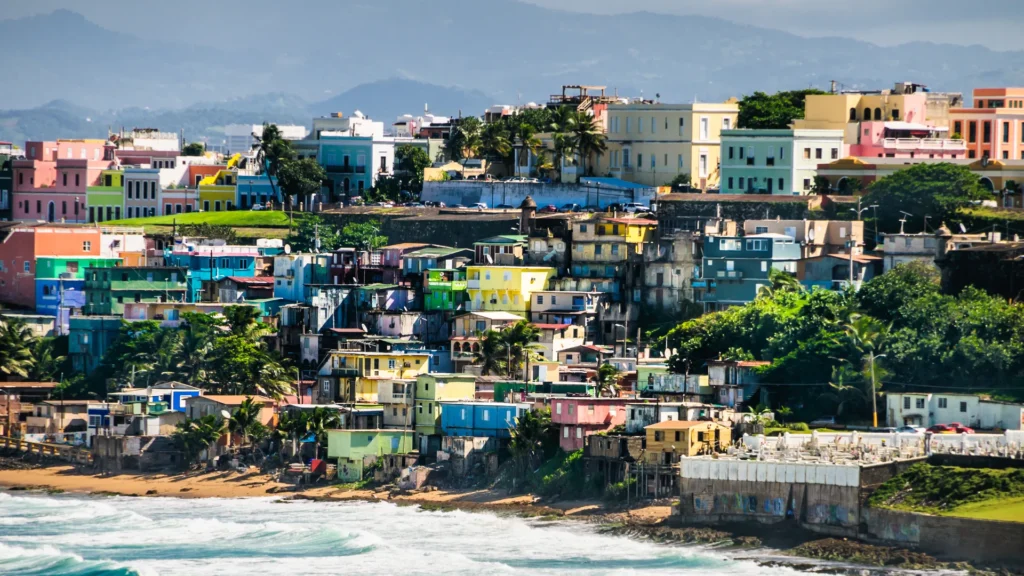
- diverse natural environment, composed of spectacular beaches, mountains, coast and large rural areas;
- living cultural identity, gastronomy, music, traditions and sense of community;
- human scale, which facilitates real social relationships and a more predictable daily life;
- legal belonging to the United States, without migratory barriers or legal uncertainty.
In the current context, these variables cease to be aspirational and become rational factors in life decisions. For many adults 55+, Puerto Rico isn’t just a pretty place; it is a more habitable, more human, and more coherent place to anchor your life.
Two clear universes, one strategy
This proposal distinguishes two universes that do not overlap and that, together, can reconfigure the country’s demographics:
1) Income pensionersIn the United States there are approximately 11.7 million people with pension incomes of $2,500 per month or more. This group does not depend on the labor market, provides economic stability, recurrent consumption and functions as a community anchor.
2) 55+ non-pensioned, potentially productive populationThe total population 55+ exceeds 103 million. Excluding pensioners, there is a universe close to 91 million, of which approximately 64 million are physically or mentally fit to work. Not everyone will, nor is it necessary. But the ability to contribute reinforces sectors where Puerto Rico faces structural deficits such as hospitality, restaurants, commerce, services, maintenance and mentoring.

A third pillar: the Puerto Rican diaspora
Added to this analysis is a decisive factor: about 5 million Puerto Ricans live in the United States today. Many emigrated more than 20 or 30 years ago and today they are in a different stage of life, with more stable incomes and an active emotional relationship with the island.
For this group, Puerto Rico is not an external alternative. It is possible to return.
Any coherent repopulation strategy must recognize that attracting population also means facilitating the return of those who never ceased to belong.
A realistic scenario: 1% in five years
There is no need for grandiloquent figures. A responsible approach is built with achievable goals.
If Puerto Rico manages to attract just 1% of each of these universes over a five-year horizon, the result would be:
- 117,000 pensioners,
- 640,000 people in the 55+ non-pensioned segment,
- for a total of approximately 757,000 new residents.
Direct economic impact
Assuming a conservative average income of $2,500 per month per person:
- Monthly Impact: ~$1.9 billion
- Annual Impact: ~$22.7 billion circulating in the local economy
This flow translates into daily spending: housing, food, health, commerce, services and community life. It is not speculative capital; it is real economy.
Housing as a structural engine
Not everyone will buy a home, and that’s healthy:
- 60% would buy → ~454,000 units
- 40% would rent → ~303,000 units
This activates:
- planned new construction,
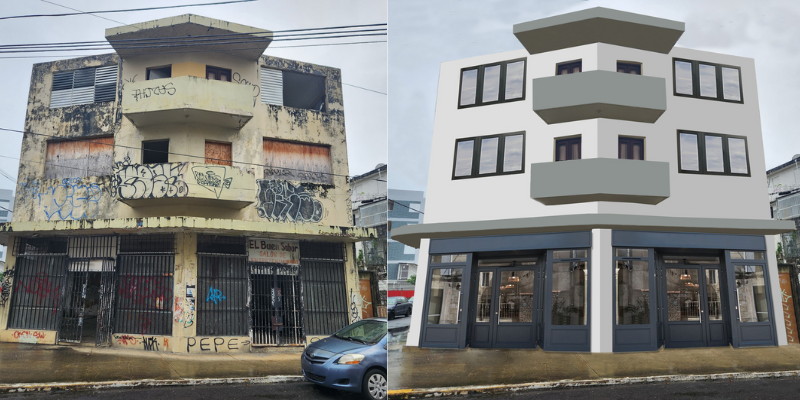
- urban rehabilitation at scale,
- Retirement Community Development,
- strengthening long-term rental.
Housing is no longer an isolated problem and becomes a central economic infrastructure.
The 78 urban centers within the ecosystem
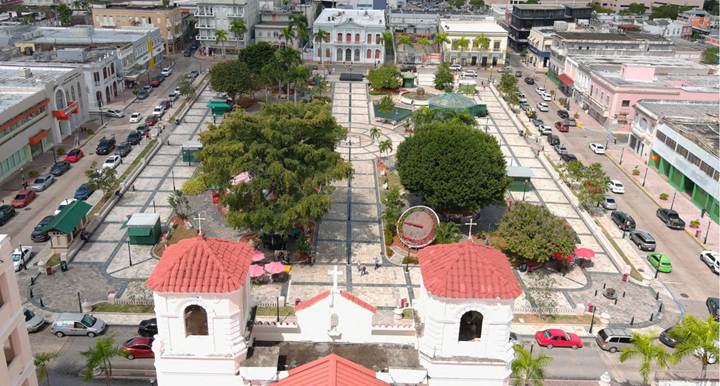
Within this broader ecosystem, Puerto Rico has 78 urban centers that can function as community anchors: walkable spaces, with local commerce, services, plazas, and social life. They are not the exclusive axis of the strategy, but part of a living territorial network, integrated with coast, countryside, mountains and city, united by a common cultural identity.
Tax incentives as a repopulation tool
Puerto Rico already has a proven tax incentive for individuals: the treatment applicable to the Resident Individual Investor under the Incentives Code (Act 60), which grants exemption in Puerto Rico on interest, dividends and the individual’s capital gains that are generated after establishing bona fide residence.
The proposal is clear and explicit: to extend that same individual contributory incentive to the 55+ segment, including pensioners and members of the diaspora, conditioned exclusively on real repopulation. That is, the benefit would not be granted for wealth or financial investment, but for effectively living in Puerto Rico, meeting the requirements of bona fide residence and occupying a home as a primary residence, either through purchase or long-term rental.
No new incentive is created.
An existing one is used for an additional country purpose.
In conclusion, nations do not rise only with capital.
They get up when people decide to anchor their lives in one place: to return, to stay… and also arrive for the first time.
Puerto Rico has everything you need: climate, natural environment, culture, identity, coast, countryside, city and communities with a human scale. If we turn these advantages into coherent public policy, repopulation ceases to be a desire and becomes a measurable economic engine: occupied housing, active commerce, living communities and a country with a future.


Respuestas