
Tax Reform in Puerto Rico: Broadening the Tax Base, Stimulating Investment and Attracting Productive Population

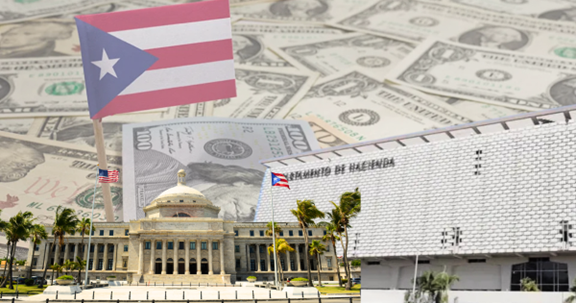
During the recent Economic Development Summit of the United Center of Retailers, the executive director of the Fiscal Oversight Board, Robert Mujica, said that the Board is carefully evaluating the deductions and tax credits within the discussion on a possible reform of the Internal Revenue Code of Puerto Rico.
That remark opens an important conversation about the future of the country’s tax system. However, before talking about eliminating incentives or preserving them indiscriminately, Puerto Rico needs to carry out a deeper analysis: identify which credits really generate economic growth and which have ceased to fulfill their original purpose.
Puerto Rico’s Act 60 consolidated multiple incentive programs that previously existed under separate laws. Among them are incentives for manufacturing, tourism, export of services and capital attraction.
The problem is that these incentives are often discussed as if they were the same, when in fact they have very different economic impacts. Some generate jobs and direct productive activity; others seek to attract financial capital; and some must be re-evaluated to determine if they continue to contribute to the economic development of the country.
For this reason, any responsible tax reform should start with something fundamental: measuring the real impact of each incentive with economic rigor.

The informal economy: the angle that is almost never discussed
One of the most important aspects of Puerto Rico’s tax system rarely appears in public debate: the informal economy.
Various economic analyses estimate that between 20% and 30% of economic activity in Puerto Rico occurs outside the formal tax system.
This means that a significant part of the country’s economic transactions are not reflected in the State’s tax collection. The result is that the tax burden ends up concentrating mainly on those who are already within the formal system.
Therefore, an effective tax reform should not be limited to increasing taxes or eliminating incentives. The real challenge is to broaden the tax base.

Moving the system towards a broad consumption model
In a previous article, I proposed exploring a structural transformation of Puerto Rico’s tax system: reducing or even eliminating the income tax and moving the system toward a broad consumption tax, which I have called an EBU.
A consumption-based model has several economic advantages:
- Expands the tax base
- captures part of the informal economy
- Simplify the tax system
- it reduces the penalty to work and investment.
Various analyses published by The Economist have pointed out that many modern tax systems are increasingly dependent on consumption taxes due to their greater capacity to capture and less distortion of economic activity.

Not penalizing investment: international experiences
Another element that deserves discussion is the treatment of capital gains.
In another article, I proposed eliminating the capital gains tax for local residents as a mechanism to stimulate domestic investment and facilitate the accumulation of productive capital.
This approach is not unusual in the world. Some of the most competitive economies have chosen not to apply general capital gains taxes, including:
- Singapore
- Hong Kong
- United Arab Emirates
These countries have developed contributory systems designed not to penalize investment or capital creation, thus facilitating economic growth and attracting investment.

Incentives to attract productive population: the 55+ credit
Beyond the tax system, Puerto Rico faces an even greater structural challenge: the reduction of its population and its labor force.
The island has been losing population for more than a decade, while its demographic structure is aging rapidly.
In another article, I proposed exploring the creation of tax credits aimed at attracting and retaining the economically active population over 55 years of age.
This program may include incentives for:
- Professionals with extensive experience
- people over 55 years of age who are still economically active
- retirees or pensioners with stable incomes
- remote workers who wish to establish residency in Puerto Rico.
This segment of the population represents a significant economic opportunity. Unlike some purely financial incentives, these people consume locally, buy housing, invest in communities, and bring human capital and expertise.
An incentive aimed at this group could help strengthen the country’s population base and stimulate domestic consumption.

A tax reform that reduces economic polarization
The tax discussion in Puerto Rico should not focus on eliminating all credits or defending them without analysis.
The objective must be much clearer:
- Rigorously evaluate existing incentives
- Broaden the tax base
- Reduce the informal economy
- Encourage productive investment
- attract economically active population.
This also implies reconsidering incentives that today disproportionately benefit very specific sectors without generating a broad impact on the economy.
A well-designed tax reform must benefit the entire economy of the country, not just limited segments.
Final Thoughts
After more than three decades working as an entrepreneur, investor, and developer in Puerto Rico, I speak from the experience of a sector that is rarely mentioned clearly enough in these debates: small and medium-sized entrepreneurs.
We are thousands of local entrepreneurs who open businesses, invest in our communities, generate jobs and, to a large extent, sustain most of the country’s tax base.
In many ways, we are the pillars that sustain Puerto Rico’s economic structure.
But when the columns carry too much weight, they inevitably start to crack.
That is what has happened to a large extent with the current tax system. The tax burden ends up concentrating mainly on those who operate within the formal system, while large sectors of the economy remain in the informal sector and some incentives end up benefiting very specific groups without generating a broad impact on the economy.
Therefore, the objective of a tax reform should not simply be to adjust rates or preserve incentives without analysis. The real challenge is to redesign the system to better distribute the economic burden and expand the country’s tax base.
That means seriously evaluating existing incentives—including those related to Puerto Rico’s Law 60—and redirecting tax policy toward areas that generate greater economic impact: attracting productive populations, strengthening the workforce, reducing the informal economy, and stimulating investment that truly transforms communities.
Puerto Rico has the opportunity to build a broader, more balanced tax system that is more aligned with its economic reality.
A system where the pillars that support the economy do not have to carry the weight of the country alone, but where economic growth and contributory responsibility are distributed more fairly among all sectors.
Strong economies are not built by putting weight on a few columns, but by expanding the foundations that support the whole edifice.




Respuestas