

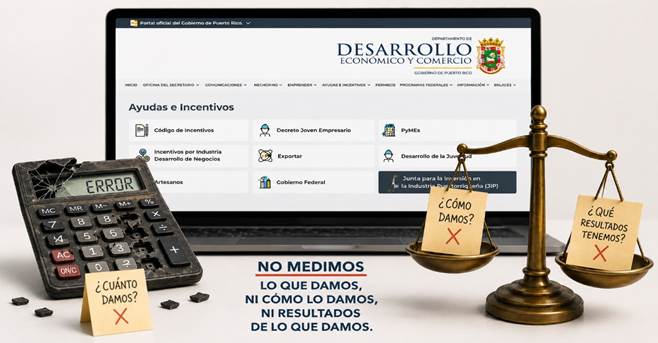
Puerto Rico’s Blind Calculator

“We dole out the most generous incentives in the world by measuring the wrong indicator. As long as we do not learn to measure our true wealth, we will continue to give it away.”
In October 2018, in a Sotheby’s room in London, a work by Banksy sold for $1.4 million and, the instant the hammer fell, it began to destroy itself: a shredder hidden in the frame slid it down before the astonished gaze of the room. By all market logic, it had just lost its value. Three years later, that same half-shredded piece — renamed Love Is in the Bin — was resold for $25.4 million. Almost eighteen times more. Not in spite of having been destroyed, but because of it. The act had become a story, and the story had become a value.
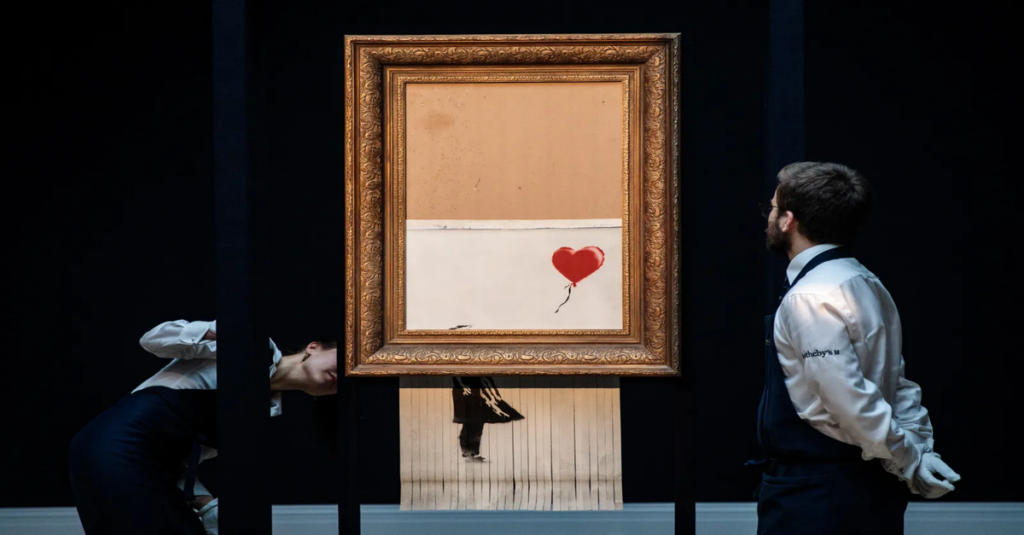
I share this because it contains a truth that modern economies have learned to ignore with remarkable discipline: a huge part of what a thing is worth is not in the thing, but in what it means. Meaning has a source. It is born from the art that a place houses, from the culture that inhabits it, from the history it carries, from the collective memory that recognizes it as its own. I call this psychosocial value: the value that a community attributes to a place for what it represents, not for what it measures in square footage. And we’ve built entire systems of measurement that, by design, don’t know how to see it. They treat it as if it didn’t exist. And what is not measured, sooner or later, is wasted.
It is convenient to be precise about how this value operates, because it is not magic or sentimentality: it is a multiplier. Let’s take a measurable case. In Peru, cuisine ceased to be folklore to become an economic engine: today eight out of ten foreign tourists come, in part, to eat, and that demand drags behind it an entire chain – agriculture, export of cocoa and chili peppers, hotels, transportation, employment in entire regions. A plate of ceviche is not only worth its ingredients; it is worth what it activates around it. The Peruvian culinary identity has become an asset that revalues everything it touches. That is the phenomenon that matters: certain places and traditions, when they are loaded with meaning and activated with a narrative, do not add value – they multiply it, and they also multiply it to their neighbors.
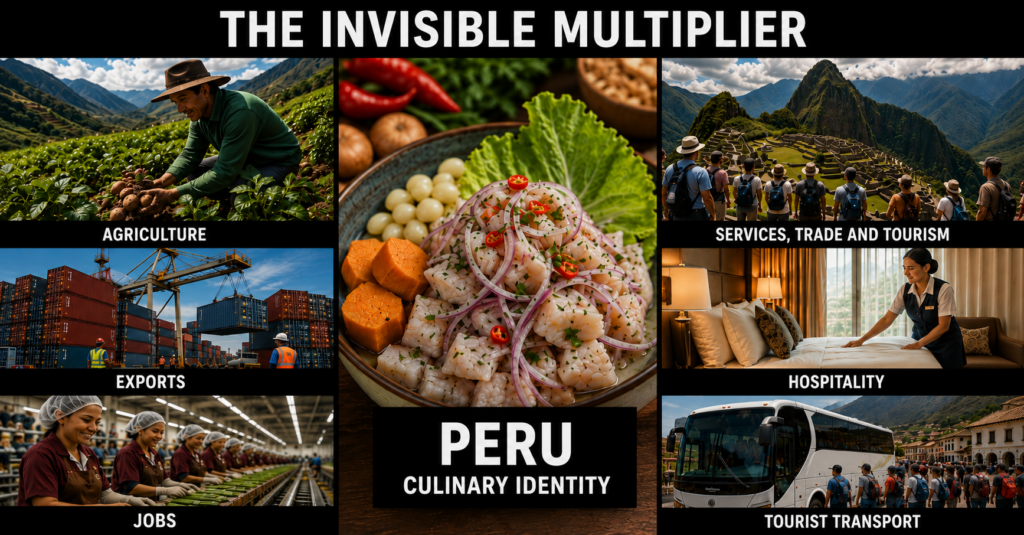
Governments already understand this logic; they only apply it to half of the economy. Manufacturing is given tax credits because it generates chained employment. To the pharmaceutical industry, because it attracts capital and knowledge. Tourism, because its expenditure spills over to thousands of small businesses. In all these cases, the incentive is justified by a multiplier effect. The question that almost no one asks is the following: what if a historic center, a culinary tradition, a landscape loaded with memory had an equal or greater multiplier coefficient —and we were ignoring it just because we don’t know how to measure it?
Few places illustrate that waste as starkly as Puerto Rico, which offers, in proportion to its economy, one of the most generous incentive regimes on the planet. Every year it distributes tax credits – the scarcest resource of a debt-ridden government – to attract investment. And yet, the public debate has been reduced to a single question: how many incentives do we eliminate? It is the question of an administrator who cuts, not that of a country that is being built. The real question is more uncomfortable: when we deliver those credits, do we demand in return the real value, or only what fits in a spreadsheet?
Because the spreadsheet is the problem. The government evaluates each project with an essentially accounting question: how much capital it moves, how many direct jobs it creates, how much it collects in the short term. It is legitimate, but incomplete. And the government itself has recognized it.
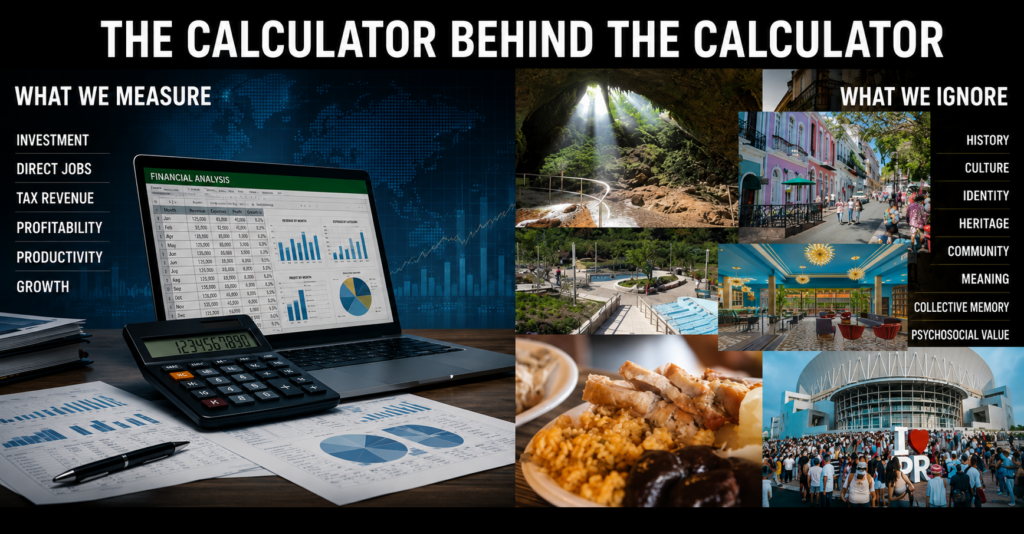
The Incentive Performance Evaluation commissioned by the Department of Economic Development and Commerce (DDEC) recognizes the complexity of measuring the effects of certain incentives beyond purely fiscal or economic indicators. Public debate itself often reduces them to a simple classification – beneficial or harmful – when many of their effects manifest themselves in broader dimensions of development. We have, in other words, a calculator that sees a single dimension of value, and with it we decide the fate of billions.
That blindness didn’t start with incentives. It comes from a way of thinking about value that has dominated economics for more than two centuries. For much of modern economic history, we assumed that people make decisions primarily to maximize material benefits. Under this logic, value becomes something that can be expressed in numbers: income, productivity, employment, profitability or collection. That approach produced extraordinarily useful tools. But it also produced an unexpected consequence: we began to accurately measure what was easy to quantify and ignore what was difficult to measure.
Behavioral economics has been questioning this premise for decades. From the pioneering work of Daniel Kahneman and Amos Tversky on decision-making under uncertainty to the later contributions of Richard Thaler, this discipline has shown that real people do not make decisions as traditional economic models assumed. What began as a fringe current ended up transforming our understanding of human behavior. Its central finding is hard to ignore today: human beings do not assign value solely according to financial criteria. We also do so according to meaning, identity, belonging, and context.
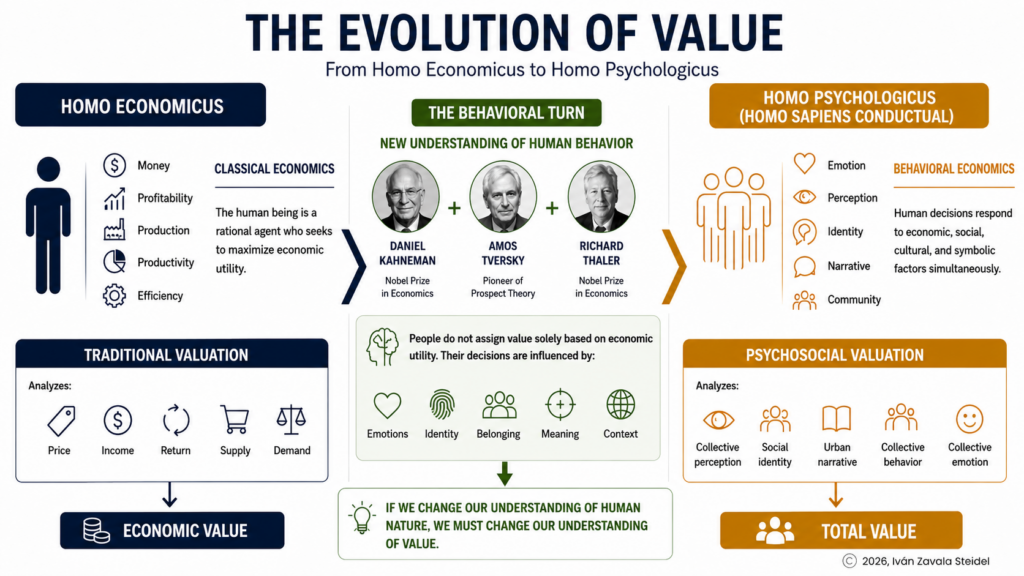
It should come as no surprise then that many of our valuation tools reflect that same vision. Modern appraisal, for example, was designed primarily to answer financial questions: to back loans, estimate risk, and produce comparable figures for the market. It fulfills that function perfectly. But it was never designed to capture how much a place means to a community, how much cultural value it retains, or how much symbolic potential it has for a region. A place that means something attracts and multiplies economic activity in a way that a merely functional place never can. The value we feel does not compete with economic value: it generates it.
Part of that value also depends on what it is compared to. When a neighbor measures his street against the one next door, he sees little. When he measures it against the world, he sees something else. Old San Juan is not a local postcard: it is a colonial town of the same lineage as Palma de Mallorca or Cartagena de Indias, destinations for which the world pays fortunes. The beaches, the fertile land that produced the coffee that kings once drank, the climate, the history, the living culture that the entire planet wants to visit today – all of these are assets loaded with that coefficient. Expanding the frame of reference is not rhetoric: it is, in itself, an act of value creation, because it changes what we are willing to demand and protect.
And the multiplier effect does not distinguish scale. A single museum rescued Bilbao and returned its public investment in six years. A district of forgotten warehouses became Wynwood, one of the most expensive square meters in Miami. An entire city, San Miguel de Allende, went from a sleepy town to one of the most coveted destinations on the planet after its declaration as a World Heritage Site. A kitchen sustains a large part of Peru’s economy. One genre – salsa, born in our streets – projects an identity that the whole world dances to. And a single symbol can move a nation: France raised hundreds of millions to rebuild Notre-Dame, and the slow consecration of the Sagrada Família has been the tourist engine of Barcelona for more than a century.
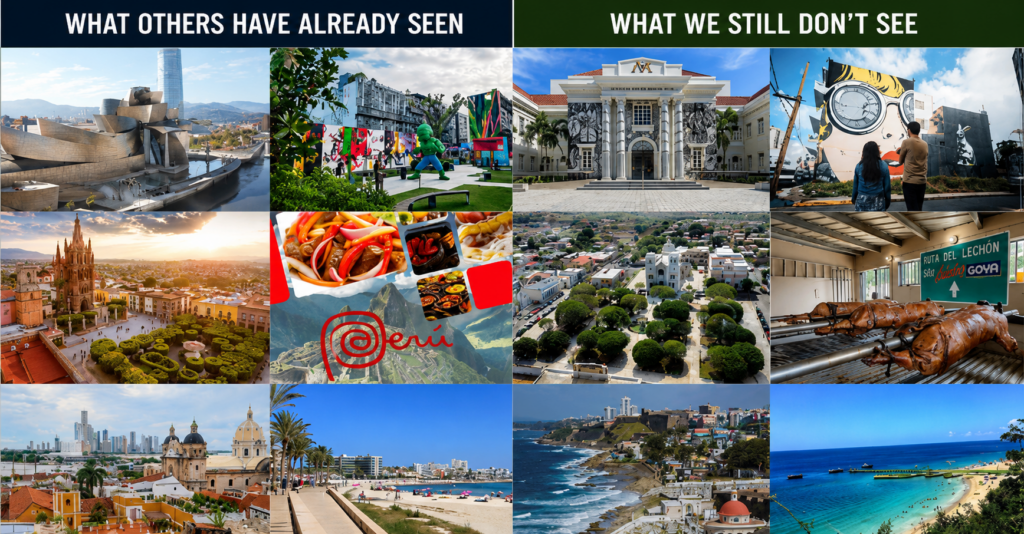
A property, a sector, a tradition, a symbol: at every scale, an asset loaded with meaning drags an economy behind it. And the basis of almost all of them is the same: a historic urban center. Ours – spread over the seventy-eight municipalities of the island – are that base. And we are letting them empty.
And here it is convenient to stop talking in the abstract. To those who make up the Fiscal Oversight Board and lead the government, to the mayors who guard each historic center, to the businessmen we invest in and to each citizen who is heir to this heritage: this ability to see and measure value is not an academic exercise, it is a shared responsibility.
Those who sign the loans decide, every year, whether to reward those who extract and leave or those who take root and multiply. But there is something at stake greater than the control of fiscal performance. When a people does not know what is worth of what is theirs, they sell it cheaply—and there are always those who, from the outside, do know how to see it.
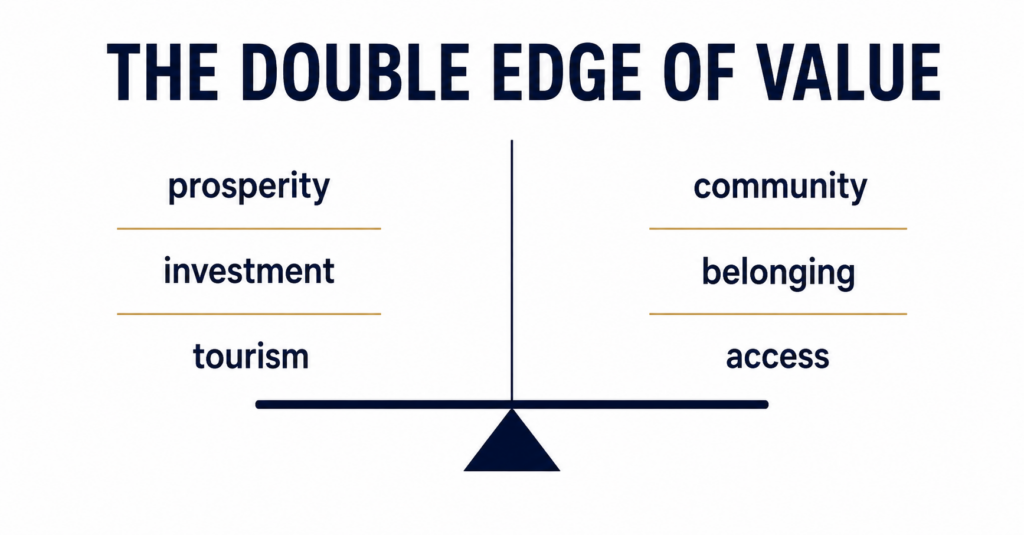
San Miguel de Allende activated its courage and, at the same time, saw its own inhabitants displaced from their city for prices they could no longer afford; A local writer called it “the second conquest, the silenced one”. That’s the double-edged edge of the sword, and the warning we can’t afford to ignore. Measuring our heritage is not only to create wealth: it is to protect it, so that it passes from one Puerto Rican generation to the next and not into the hands of others who arrived knowing what we forgot.
But meaning is not automatic, and it is worth saying it frankly. Having it is not enough; it must be activated. On a hill in Guaynabo, a museum dedicated to Puerto Rican music was built — with two thousand donated pieces, with the name of a living legend as a flag — and even so it never opened. More than fifteen million dollars were invested and the work was shipwrecked amid scandals and abandonment. The lesson is not that heritage does not yield; it is the opposite. We had all the raw material of value – music, memory, pride – and we let it rot for lack of what no accounting calculator records: a living use, honest management, a narrative that would turn potential into return.
Here the serious objection arises, and it must be faced head-on: if we begin to reward cultural or symbolic value, do we not open the door to justifying any subsidy with nice words? The risk is real. But the answer is not to continue measuring only what is easy; it is measuring the difficult with rigor. The multiplier coefficient of a cultural asset can be estimated with explicit, auditable and comparable criteria, just as development economics learned to construct indices for such intangible things as institutional quality or human well-being. Pretending that what does not fit in the spreadsheet does not exist is not prudence: it is the decision, disguised as neutrality, to continue giving away the most valuable thing we have.
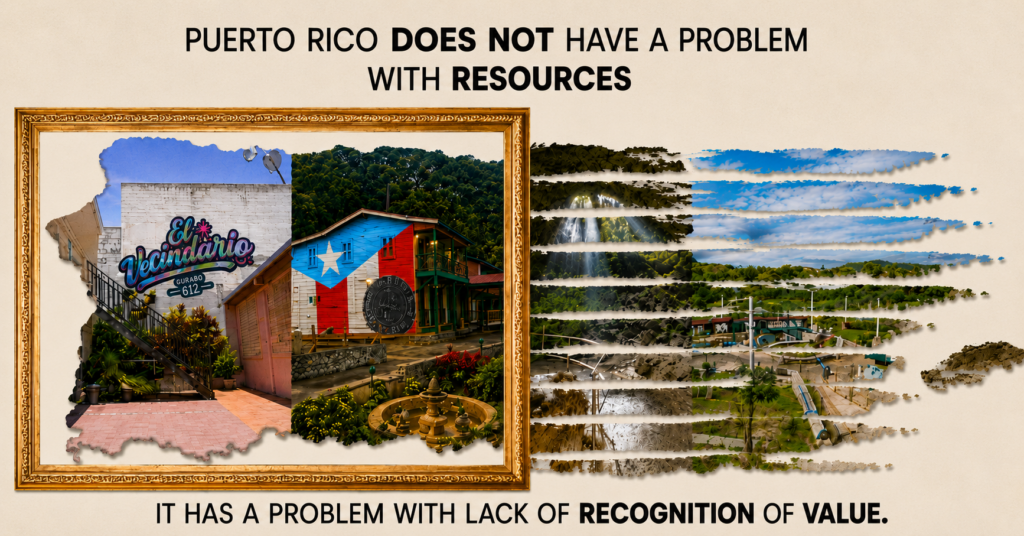
A shredded work that multiplies its price seems to us an eccentricity of art. A cuisine that moves an economy seems to us a Peruvian rarity. But both are the same lesson: value lives, to a large extent, in meaning – and a country that does not know how to measure its own is condemned, again and again, to give it away, piece by piece, to those who did know what it was worth.
The question, then, is not how many incentives to cut. It is whether those who have the power to decide today will have the vision to build a different yardstick: one that rewards those who multiply our wealth and not those who only extract it, and that protects, while it is still ours, the heritage that makes us who we are. Puerto Rico does not need to invent its value; you already have it. It needs, at last, leaders who can see it—and the courage to measure it before others, who do know what it’s worth, measure it for us.
Respuestas