

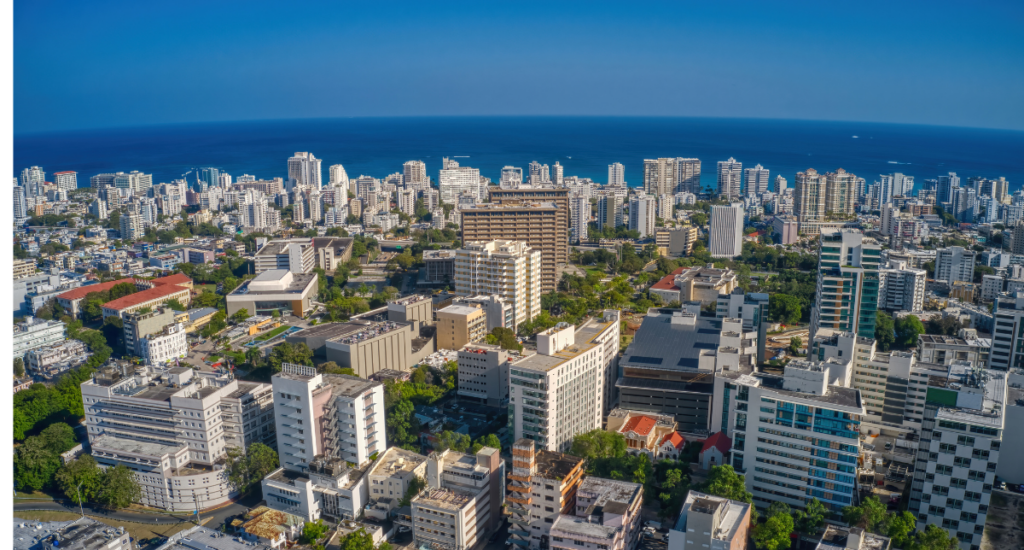
From History to the Future: The Evolution of Real Estate and Puerto Rico’s Real Estate Boom

Throughout history, real estate has been a fundamental pillar in the accumulation of wealth and power. From the earliest civilizations to the digital age, land ownership has reflected the economic, social, and cultural priorities of each era. Today, global hyperconnectivity has transformed the real estate market, enabling unprecedented capital mobility and redefining the perception of property values. Puerto Rico, with its rich history, strategic position, and unique incentives, is at an inflection point that projects it as one of the most exclusive and desired real estate markets in the world.
Since the beginning of civilizations, real estate has been one of the most desired and coveted investment instruments, as it provided sustenance, stability, and power. In many ancient cultures, owning land was a symbol of wealth and social hierarchy. These civilizations built their economic and political structure around the control and exploitation of the land. Human patterns repeat! Throughout humanity, the earth remains a symbol of security, power, and wealth.
Historical evolution of real estate worldwide
-
- Subsistence Economy and Barter (10,000 B.C. – 3,000 B.C.):
-
- The first agricultural communities depended on the land for their sustenance, establishing a direct relationship between territory and survival.
-
- Subsistence Economy and Barter (10,000 B.C. – 3,000 B.C.):
-
- Slave Economy (3,000 B.C. – 5th century A.D.):
-
- Civilizations such as Egypt, Greece and Rome consolidated the importance of the land as a source of power, establishing models of latifundia that lasted for centuries.
-
- Slave Economy (3,000 B.C. – 5th century A.D.):
-
- Feudalism (5th – 15th century):
-
- Land became the main base of wealth and political power. Feudal lords offered protection in exchange for work and loyalty.
-
- Feudalism (5th – 15th century):
-
- Mercantilism (15th – 18th century):
-
- Global trade and colonization boosted the exploitation of lands overseas. Wealth was accumulated through trade, raw materials, and monopolies.
-
- Mercantilism (15th – 18th century):
-
- Classical and Industrial Capitalism (XVIII – XIX Century):
-
- Industrialization shifted the value of land to cities, transforming urban real estate into high-value assets.
-
- Classical and Industrial Capitalism (XVIII – XIX Century):
-
- Financial Capitalism (19th – 20th Century):
-
- Speculative capital, stock markets, and modern banking emerged. Real estate became a store of value during economic crises.
-
- Financial Capitalism (19th – 20th Century):
-
- Neoliberal capitalism (1970 – 2008):
-
- Privatization and globalization transformed real estate into a global, speculative and strategic asset.
-
- Neoliberal capitalism (1970 – 2008):
-
- Digital Feudalism and Digital Economy (2008 – Present):
-
- Big tech controls data, networks, and artificial intelligence. Paradoxically, physical real estate has regained prominence as a safe haven of value in the face of digital volatility, becoming the new collector’s banner for large investors.
-
- Digital Feudalism and Digital Economy (2008 – Present):
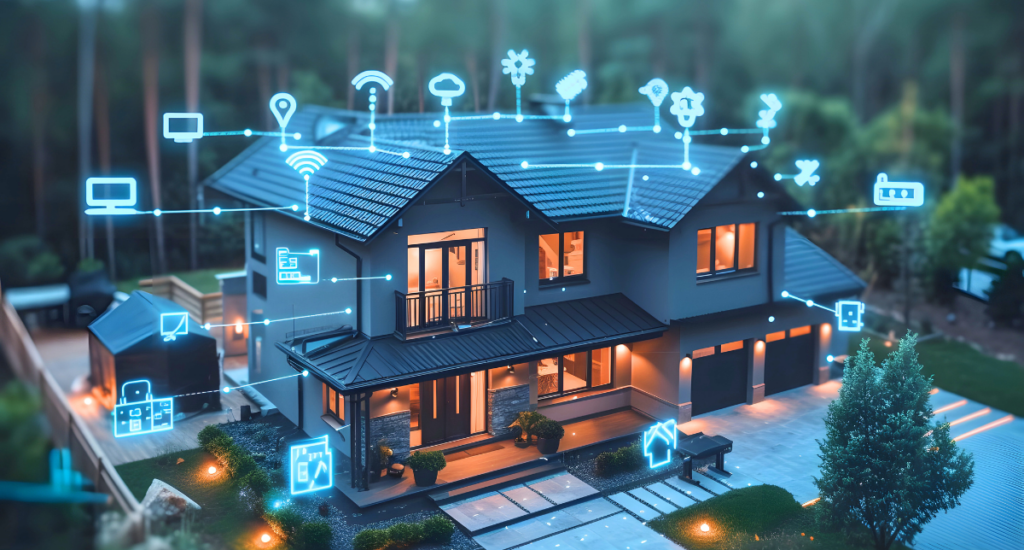
Hyperconnectivity and its impact on Puerto Rico’s real estate market
In the era of hyperconnectivity, where people, devices, and systems are interconnected through digital networks, the real estate market has undergone significant transformations. This interconnectedness has redefined the perception and value of real estate around the world, and Puerto Rico is no exception.
Properties as collectibles
Hyperconnectivity has elevated certain real estate properties to the status of collector’s items, similar to works of art or historical pieces. Properties that possess unique characteristics, whether cultural, historical, ecological, or architectural, have experienced substantial increases in value. Factors such as digital platforms and air connectivity have made it easier for buyers from all over the world to identify and access these exclusive properties in a matter of hours.
Digital platforms and the real estate market
Platforms such as Airbnb and VRBO have democratized access to properties in various parts of the world, allowing owners to make their properties profitable and users to experience unique stays. In Puerto Rico, this has influenced real estate values, especially in tourist and urban areas. However, it has also sparked debates about its impact on the availability and affordability of housing for local residents.
Blockchain and Asset Tokenization
Tokenization allows a property to be divided into digital tokens that represent fractions of it, making it easier for anyone to invest in real estate with small amounts of money. This removes traditional barriers and democratizes the market. In addition, blockchain offers a decentralized and transparent ledger that reduces fraud and increases trust in international transactions.
It is necessary for Puerto Rico to adopt these technologies, breaking traditional schemes to multiply the wealth of Puerto Rican families.
Air connectivity and accessibility
The expansion of air routes and the ease of international travel have made properties in locations once considered remote now accessible to a global market. This has increased investment in real estate in Puerto Rico, positively influencing its local economy.
International investment and security
Puerto Rico, with its U.S. territorial status and strong legal framework, has become an attractive destination for international investment. This has led to rising property values on the island, positioning it as a safe haven for global investors.
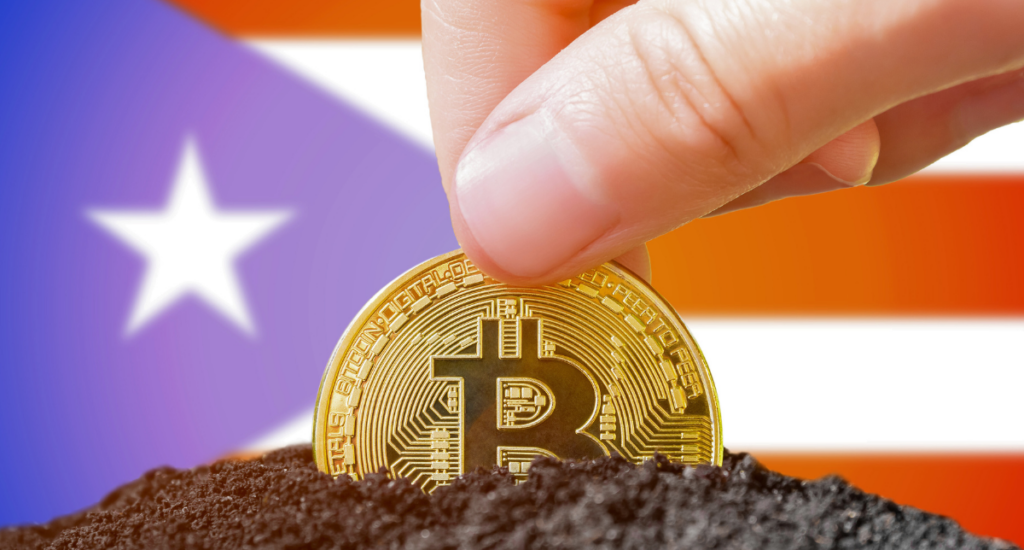
Puerto Rico: the real estate Bitcoin of the Caribbean
Currently, properties in Puerto Rico have acquired characteristics similar to assets such as Bitcoin. Its subjective value is driven by:
-
- Exclusivity and uniqueness:
-
- Historical, cultural, ecological and self-sufficient properties escape traditional valuation models, defining their value by their uniqueness.
-
- Exclusivity and uniqueness:
-
- Safe Haven:
-
- Puerto Rico’s strategic location offers geopolitical stability and relative security in the face of global threats. This attracts foreign investors looking for a safe place to live and invest.
-
- Safe Haven:
Conclusion: Real Estate as an Anchor of the Economy
Puerto Rico is at a turning point. Just as we projected in 2014 the impact of the tax laws Law 20/22 on the value of properties and, in 2020, the boom in post-COVID tourism, today we envision a scenario where the island’s properties will become assets coveted by the elite. This growth, if properly managed, can position Puerto Rico as a global model of sustainable, inclusive, and culturally respectful development.
However, it will be crucial to balance economic progress with the protection of the most vulnerable sectors to prevent Puerto Ricans from becoming tenants on their own land.
Respuestas